Local History

The Vly’s Dutch history lives on in Lucy Van Sickle’s book

The Vly’s Dutch history lives on in Lucy Van Sickle’s book

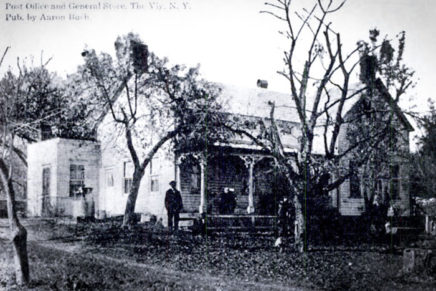
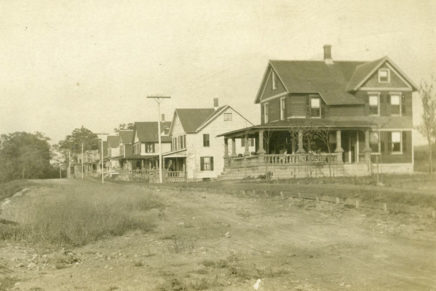
Vly-Atwood, known hereabouts as “the Vly,” was a hamlet where people attended school and church, and gathered for social congress. Named from the Middle Dutch word vley or valeye, meaning valley or swamp, the Vly is actually situated in an upland area of the Town of Marbletown, above the buried aqueduct that takes water from the Ashokan Reservoir to New York City, and the Esopus Creek, which flows through a narrow canyon below.

The history of the Haviland-Heidgerd Collection in New Paltz

The history of the Haviland-Heidgerd Collection in New Paltz

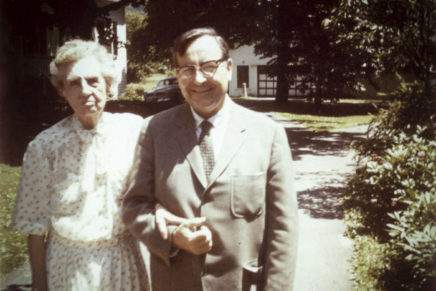
This is the story of two remarkable people who, 51 years ago, envisioned a place where people from near and far could come and research their genealogy or learn about local history – a place where membership was not required, with regular hours, a knowledgeable staff and a collection of research materials that were guaranteed to be there when you needed them.

What New Paltz newspapers said 100 years ago

What New Paltz newspapers said 100 years ago

Words from a lost age. “The present campaign has certainly been carried on, in a very ladylike manner. Never before have we observed such courtesy in a political campaign. There has been little mudslinging, our opponents have treated us in a very gentlemanly manner.”

The story of the potter’s field at New Paltz Rural Cemetery

The story of the potter’s field at New Paltz Rural Cemetery

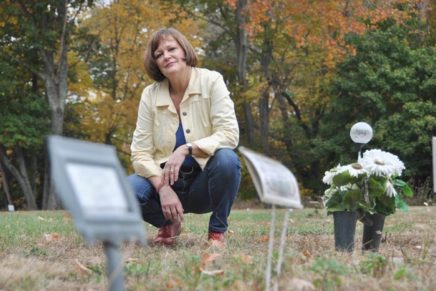
We all die, of course. But some of us die far from home. Some of us die lost, without the memory of friends or family. Some of us die in alleyways or emergency rooms. Some die face-down in drainage ditches or under frozen sheets of broken cardboard boxes. Some of us, in other words, die broke, alone, forgotten. These are the people whose bodies have for thousands of years filled what are most commonly called “potter’s fields.”