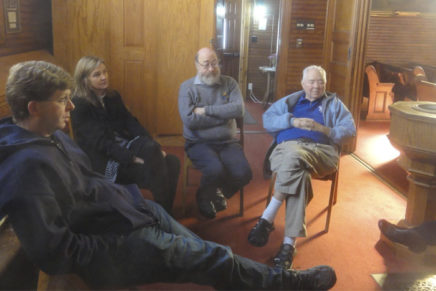
Support and resist: Woodstock religious leaders meet in election’s aftermath
They discussed how to formulate a spiritual approach to what they saw as trauma stirred up by the election.

They discussed how to formulate a spiritual approach to what they saw as trauma stirred up by the election.

Now that millions of people are seeking refuge from the war-torn Middle East, it’s instructive to read the memoir of a Hudson Valley resident who spent her early childhood in a refugee camp in Germany after World War II.
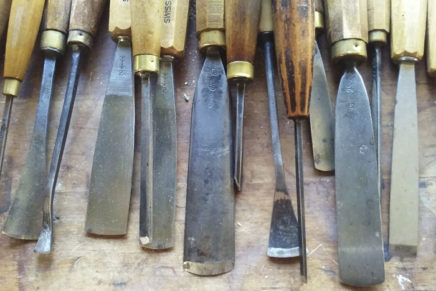
The class in wood-carving is part of a smorgasbord of art, craft, and boat-building courses that transport students to a slower, older time. Students learn square rule timber framing, paint maritime scenes, cast marine hardware in bronze, build a canoe, guitar, toboggan, or sea chest, and more.
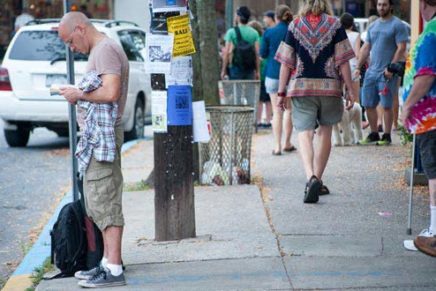
As home-sharing services such as Airbnb and HomeAway continue to be popular in Ulster County, municipalities are acting to establish regulatory oversight, while the county moves toward collecting a bed tax from short-term home rentals.

“People see us at rallies and think we’re CMRR [Catskill Mountain Rail Road]. We’re salt and they’re pepper — two different groups working toward the same goal.”
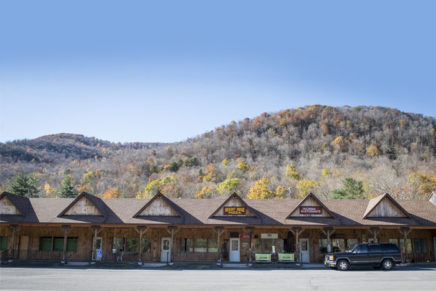
Phoenicia Plaza, the little shopping center located on Route 28 a mile east of Phoenicia, has been vacant since a fire left the storefronts damaged near the end of last winter. Now that repairs have been completed, businesses are lining up to open in the plaza.

‘I don’t mind having a little time now and then to feel like I’m living a pioneering lifestyle…For me, the worst was having to go to a laundromat…’
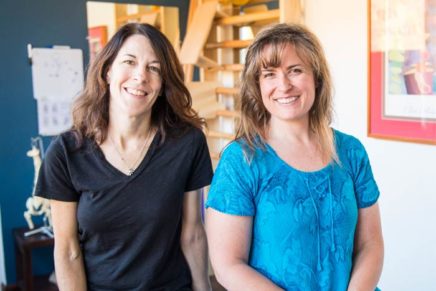
Ellie Kramer of Woodstock Physical Therapy announced that her facility on Route 212, east of Woodstock, has been taken over by Access Physical Therapy and Wellness, a company that owns over 20 offices and will keep her on as director and physical therapist, along with other staff members.
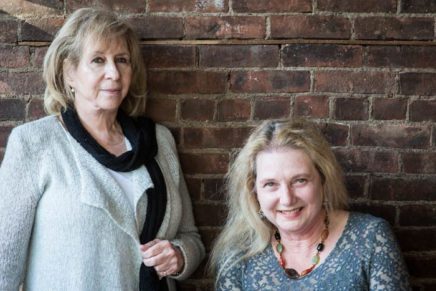
“There’s an entirely new generation or two who have no idea what it was like in the days of the wire hangers and back-alley abortions.”

Bard College librarian Helene Tieger’s hands, gloved in blue latex, place the 1556 copy of the Magna Carta on blocks that will support it with minimal stress on the spine. With infinite gentleness, she opens it to display a pair of pages. I can’t read the Latin, but my mind is boggled by the idea that I’m looking, in person, at a world-changing text printed four and half centuries ago.